Narrative Vs Reality of 2026 CVE Apocalypse
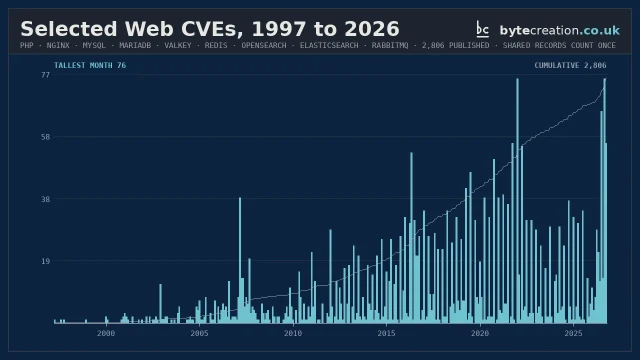
Are LLMs driving a wave of CVEs? Is the wave actually driven by AI marketing? Is something else going on? Explore the data behind the narratives to see what’s true.
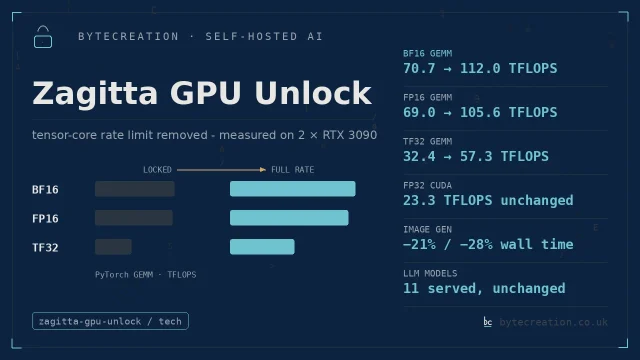
NVIDIA caps tensor-core speed on GeForce cards for FP16/BF16/TF32 math, while the same silicon in RTX A-series cards runs at full rate. gpu_unlock removes that cap; these are the benchmarks.
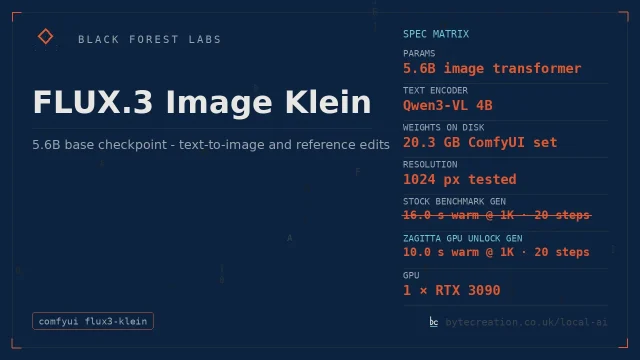
FLUX.3 Image Klein: a 5.6B Black Forest Labs checkpoint on a headless ComfyUI stack, the full-scene-caption prompting it demands, and 1024 px generation times before and after the GPU unlock.
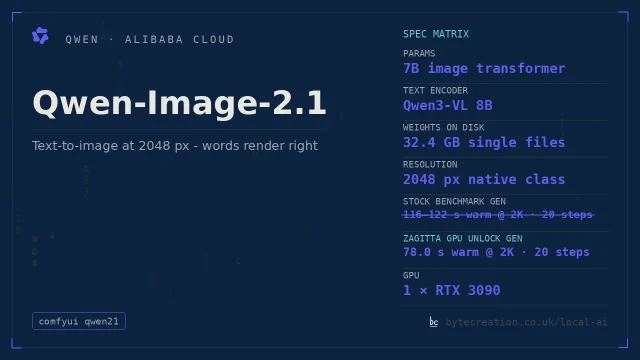
Qwen-Image-2.1 for local text-to-image at 2048 px: a 7B image transformer with a Qwen3-VL 8B text encoder, run through diffusers and ComfyUI, with lettering that renders right and measured timings.
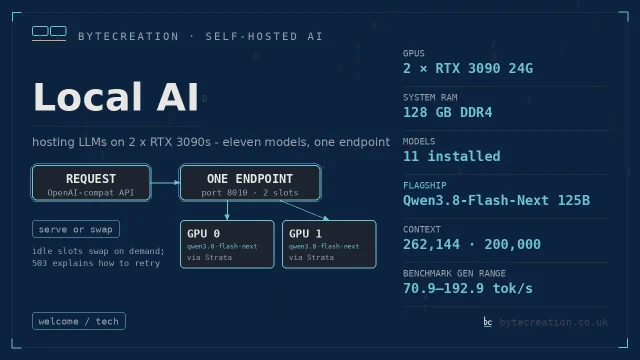
Summary of self-hosting LLMs: two second-hand RTX 3090s, a Ryzen 9 5900X, 128 GB of RAM, eleven models behind one endpoint, the software stack, and how the figures were measured.
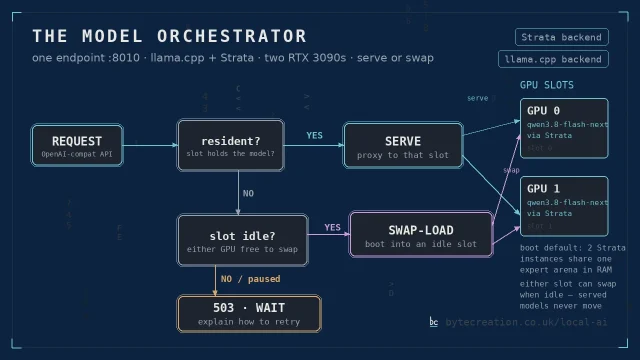
Eleven models, two GPUs and one OpenAI-compatible endpoint on port 8010: a FastAPI proxy over a JSON registry, and the decision that serves from a resident slot or swaps into an idle one.
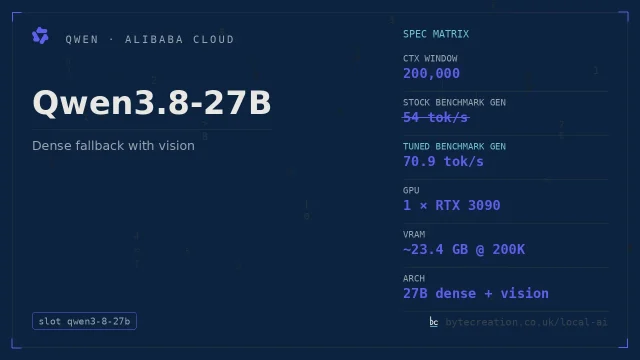
Qwen3.8-27B: the dense representative with native vision and an embedded MTP head, and a tuning case study where one reasoning-effort setting took generation from 42.3 to 72.5 tok/s.
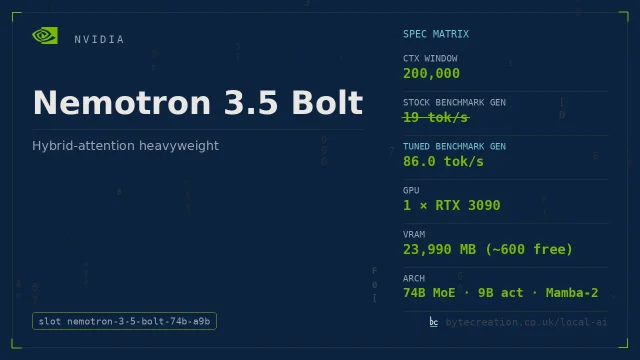
Nemotron 3.5 Bolt 74B: from 16-24 tok/s on a community Q4_K_M conversion to 86 tok/s and 200K context on NVIDIA’s IQ2_XXS recipe, 3.6x from the quant recipe alone.
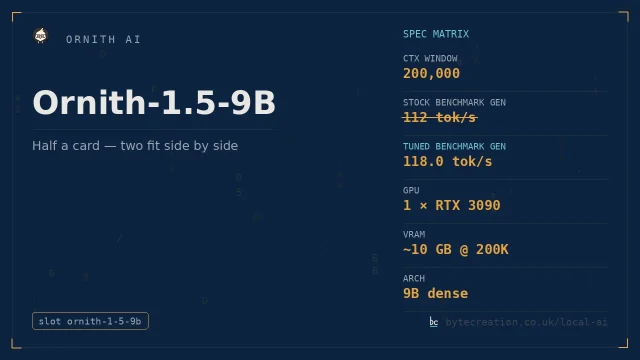
Ornith 1.5 9B: 9B dense, 5.6 GB of weights, ~10 GB of VRAM even at 200K context and 118 tok/s, the cheapest token locally and the only model here that shares a card happily.
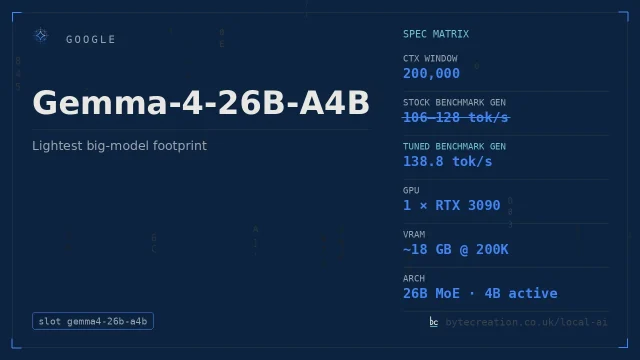
Gemma 4 26B-A4B: the smallest MoE installed, ~18 GB of VRAM at 200K context with about 6 GB to spare and 138.8 tok/s decode, for jobs that need most of the card for something else.